Bad Capacitor and Fused Wires Stopped This AC Cold
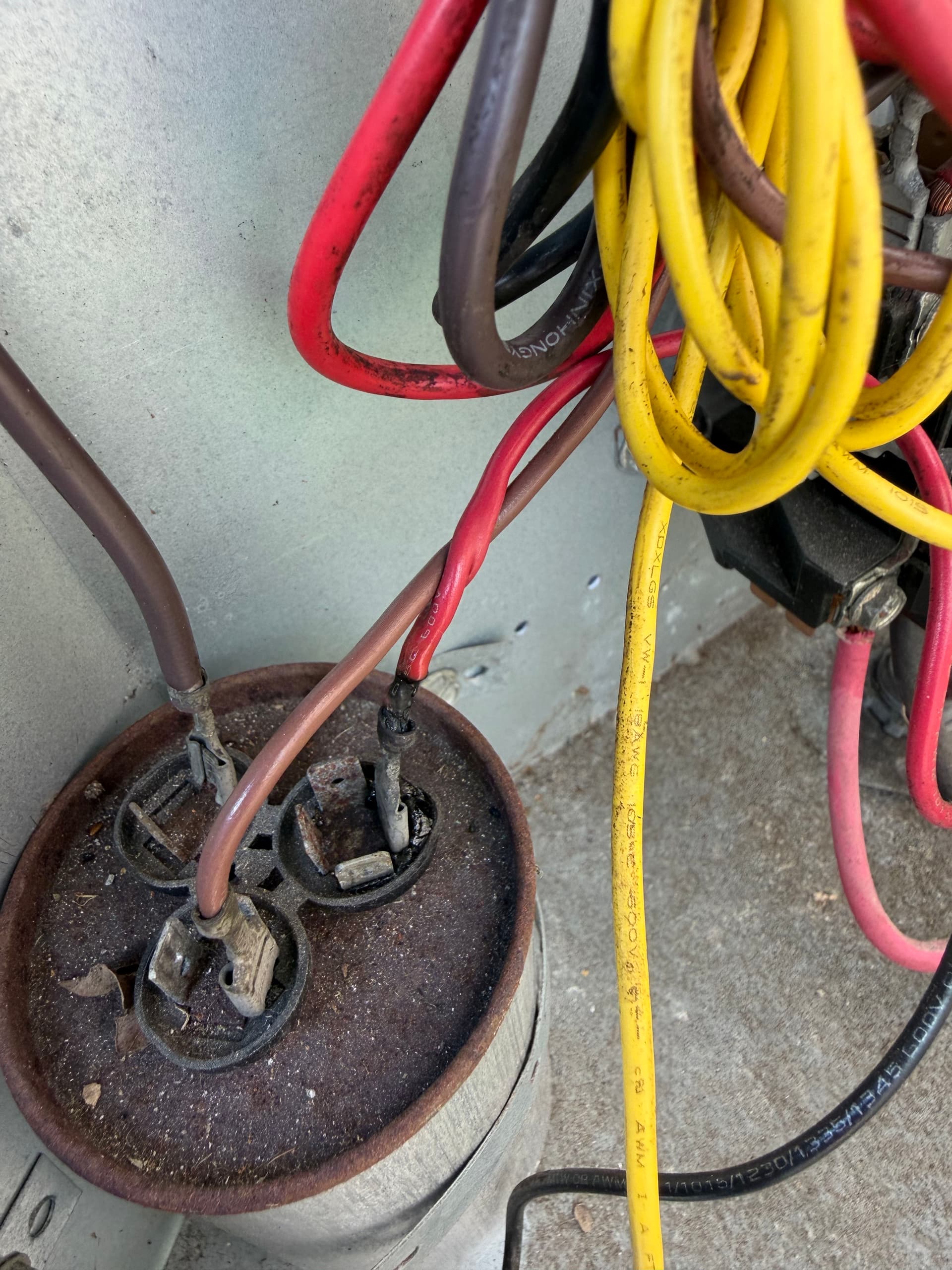
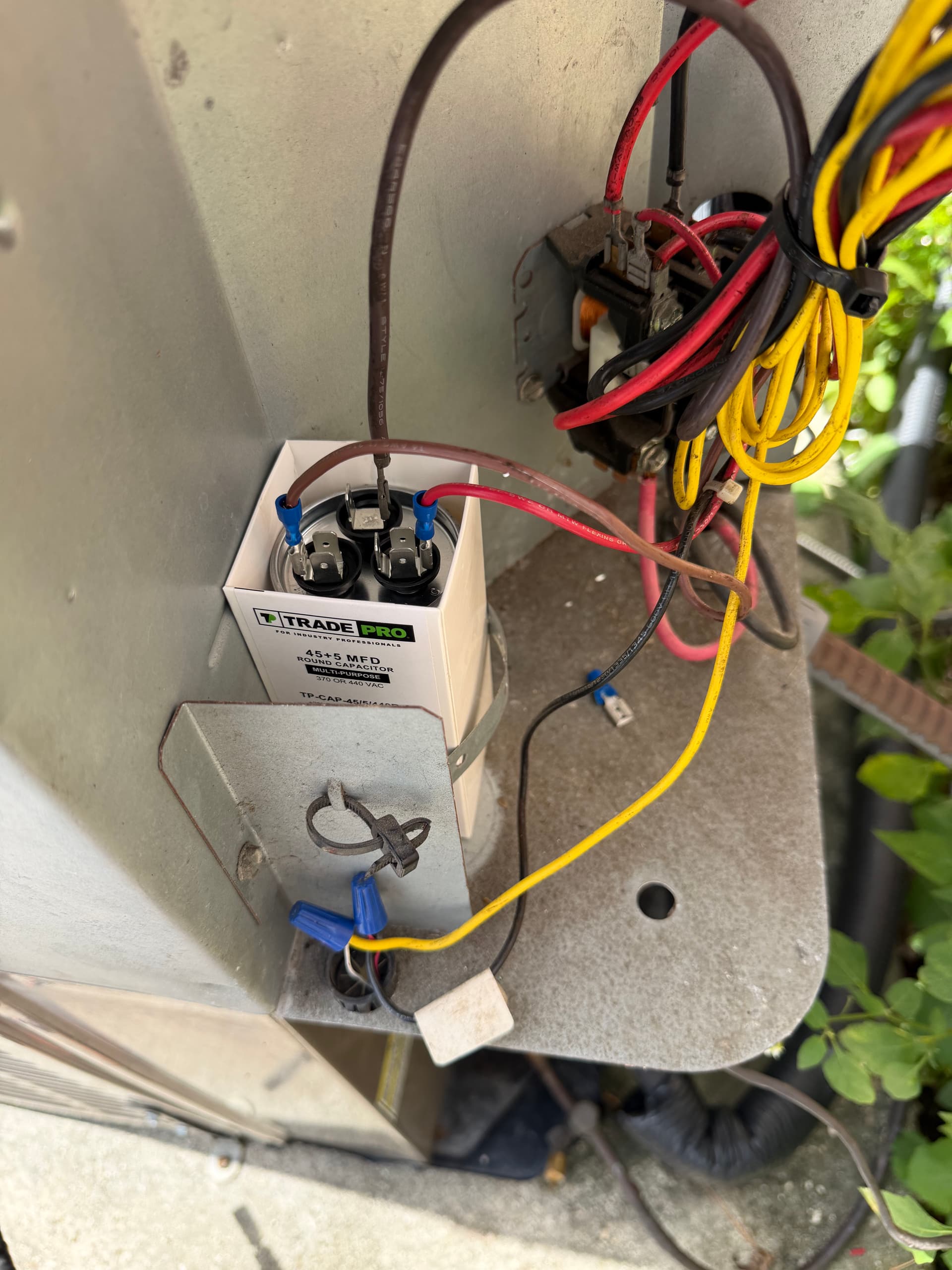
A failed capacitor is one of the most common reasons an AC system suddenly stops working. But when the wires start fusing to the terminals on top of that, you're dealing with something that needs attention fast - not next week.
Here's what we were working with: a heavily corroded, burned-out capacitor with wires that had fused right to the terminals. That kind of heat damage doesn't happen overnight. It's the result of a capacitor that's been struggling for a while, drawing more current than it should and slowly cooking everything around it.
We pulled the old unit, cleaned up the connection points, and installed a new TradePro 45+5 MFD round capacitor - properly secured and wired. Clean terminals, solid connections, no shortcuts. The system needs a strong, stable start every single time it kicks on, and that's exactly what a healthy capacitor delivers.
Most people don't think about their capacitor until the system won't start at all. By that point, the damage has usually already spread. Catching this kind of failure early - or during a routine AC maintenance visit - can be the difference between a simple part swap and a much more expensive repair down the road.
If your system has been slow to start, making a humming noise, or just cutting out unexpectedly, don't wait on it. That's often the first sign a capacitor is on its way out.